_%EC%8A%AC%EB%A1%9C%EA%B1%B4_%EA%B0%80%EB%A1%9C_%EB%B8%94%EB%9E%99-2.png)
The Rise of the "Smart Hub": Agentic AI and Hong Kong’s 2026 Transformation

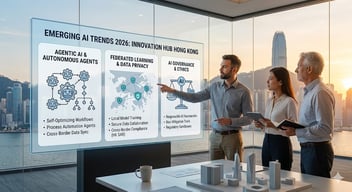
In the bustling streets of Central and the high-tech corridors of Cyberport, a new phrase is dominating boardrooms: Agentic AI. While the rest of the world is still marveling at chatbots that can write emails, Hong Kong is rapidly positioning itself as a global leader in AI that actually executes.
As we navigate through 2026, the city isn't just using AI to generate content, it is using AI to power the city’s complex financial, legal, and retail engines.
1. Beyond the Chatbot: Why Hong Kong is Going Agentic
Hong Kong has always thrived on efficiency and high-speed transactions. Generative AI (like ChatGPT) was a great assistant, but Agentic AI is a digital workforce. These are systems that can reason, plan, and use tools to achieve a goal autonomously.
Why now in HK?
-
The Talent Gap: With a high demand for specialized skills, businesses are using AI agents to handle routine legal reviews and financial compliance.
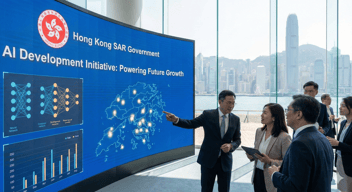
- Government momentum: The Hong Kong Monetary Authority (HKMA) recently launched the Fintech Promotion Blueprint, specifically targeting the acceleration of "practical, advanced applications" like agentic risk management
- Strategic Hub: PolyU recently launched Hong Kong's first cross-border legal AI agent system, designed to navigate the complexities of digital intelligence between the mainland and the global market.
2. Key 2026 Trends Shaping the City
Agentic Commerce: Your AI is Doing the Shopping
According to recent forecasts from Adyen, "Agentic Commerce" is a top trend for HK retailers this year. We are seeing a shift where AI agents—linked to users' payment details—actually negotiate and purchase products on behalf of consumers. Imagine your personal AI agent finding the best price for a new iPhone at a Fortress or Broadway, negotiating a bundle deal, and handling the checkout while you sleep.
The "SaaSpocalypse" in Central
The financial district is feeling the heat. With the rise of agentic tools (like Anthropic’s workplace agents), traditional software models are being disrupted. Investors in HK are reassessing the value of software companies: if an AI agent can perform data analysis and compliance instantly, the old "billable hour" model is facing a structural shift.
The Governance Blueprint
With great power comes great regulation. Hong Kong is currently pioneering "Privacy-Preserving AI" frameworks. Because agents often have access to API keys and bank accounts, the city is focusing on "Bounded Autonomy"—ensuring agents can work within strict guardrails to prevent "rogue" financial transactions.
3. How HK Industries are Adapting
The real power of Agentic AI in Hong Kong isn't just "efficiency"—it’s the ability to bridge the gap between complex data and immediate action. Here is how key sectors are evolving:
Finance & Banking: The End of Manual Compliance
In the heart of Central, the days of analysts spending hours on KYC (Know Your Customer) and AML (Anti-Money Laundering) checks are fading. New agentic systems don't just flag suspicious transactions; they independently investigate them. An agent can cross-reference global sanctions lists, crawl public records, and verify corporate structures across borders, presenting a completed risk report to a human officer in seconds rather than days.
Legal Services: Navigating Cross-Border Complexity
Hong Kong remains the gateway to the Greater Bay Area, but legal friction has always been a hurdle. With the launch of systems like PolyU’s cross-border legal AI, agents are now handling the "heavy lifting" of jurisdictional compliance. These agents can ingest a contract, identify clauses that conflict with Mainland Chinese law versus Hong Kong law, and propose autonomous redrafts that satisfy both legal frameworks simultaneously.
Retail: The Rise of Adaptive Commerce
The local retail scene is moving toward "Frictionless AI." Instead of a customer clicking through a static website, companies like Fibr AI are enabling agents to act as "concierges." These agents can autonomously manage inventory levels, adjust pricing dynamically based on foot traffic in Tsim Sha Tsui, and even communicate with other agents (the customers' personal AI) to negotiate bulk discounts or VIP loyalty rewards in real-time.
Logistics & Trade: Intelligent Supply Chains
At the Port of Hong Kong, Agentic AI is moving beyond simple tracking. Modern logistics agents act as "Digital Dispatchers." If a typhoon is detected in the South China Sea, the agent doesn't just send an alert; it proactively contacts shipping partners, reroutes cargo to alternate warehouses, and updates insurance documentation—adjusting the entire supply chain workflow before a human has even sipped their morning coffee.
4. The Human Element: High-Value Expertise
Despite the automation, Hong Kong’s workforce isn't disappearing—it's evolving. As routine tasks are automated, the value of human judgment is skyrocketing. In 2026, the most successful professionals in HK are the "Agent Managers"—those who can define the goals, set the ethical guardrails, and oversee the digital agents doing the heavy lifting.
"The fear isn't about AI taking jobs; it's about the speed of the shift from 'doing' to 'directing'."
What's Next for Your Business?
The period of isolated experimentation is coming to a close. What lies ahead is large-scale deployment and real business integration. In Hong Kong, Agentic AI is no longer a conceptual trend or industry buzzword — it is rapidly becoming foundational infrastructure for the next phase of economic growth.
Organizations that move decisively will not only adapt to this shift, but help define it.